How Scrunch tracks competitor performance in AI search
Scrunch tracks competitor visibility across all major AI platforms — including ChatGPT, Claude, Gemini, Perplexity, and Microsoft Copilot. It shows exactly where and how rivals appear in AI responses compared to your brand.
Scrunch combines automated monitoring, citation analysis, and gap detection. This lets you pinpoint where competitors are gaining ground and why.
What Scrunch monitors
- Cross‑platform presence
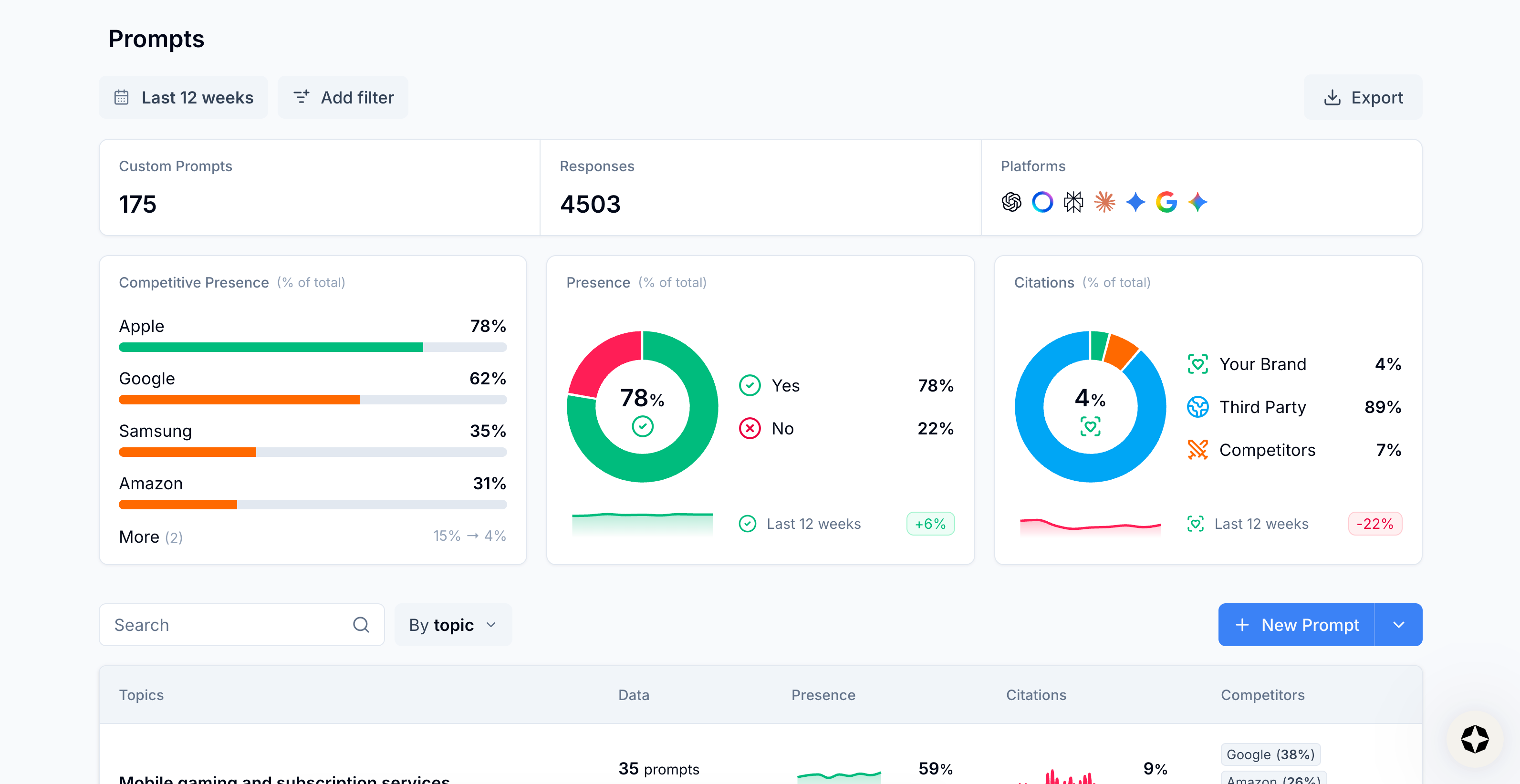
- See how often competitor brands are mentioned or cited across supported AI platforms: ChatGPT, Claude, Gemini, Perplexity, Google AI Mode, Google AI Overviews, Meta AI, and Microsoft Copilot. Support for Grok is coming soon.
- Competitive presence monitoring
- Compare brand and competitor mentions across tracked prompts and platforms.
- AI search trend reporting
- Track how often competitors are cited or mentioned over time for topics you monitor.
- Individual prompt drill‑downs
- View competitor mentions and citations for each seed prompt and its variants by platform, with full responses for context.
- Citation tracking and influence
- Identify which competitor or third‑party webpages drive AI answers. Scrunch calculates an Influence Score for each source by multiplying the percentage of responses that cite the source by the number of unique prompts.
- Automated gap analysis
- Get automatic flags when AI responses mention competitors but not your brand, revealing immediate visibility gaps.
- Rich filtering for precision analysis
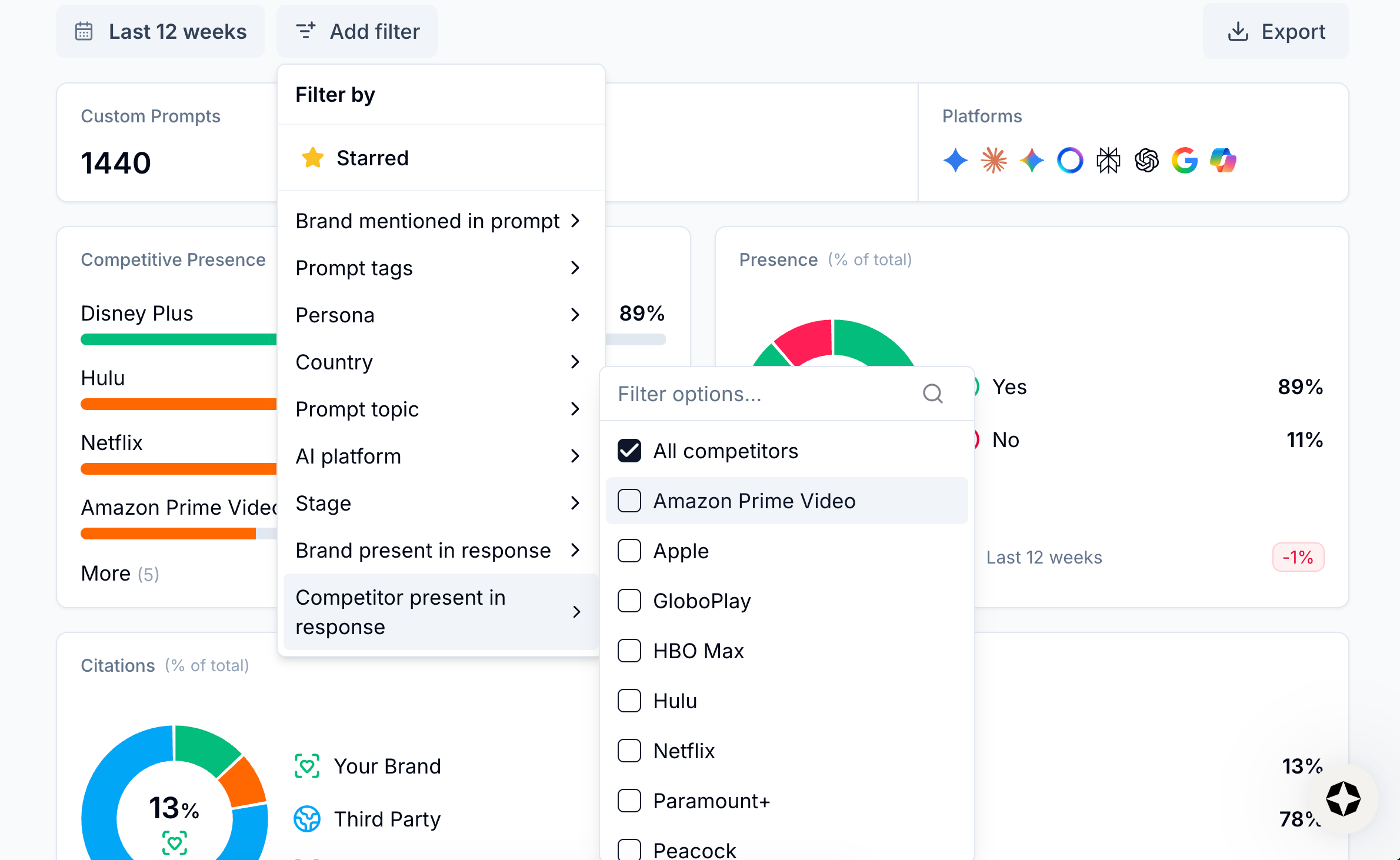
- Filter competitive data by time period, individual competitors, prompt, persona, AI platform, geography, and more.
How the analytics help you measure impact
Scrunch aggregates and compares key metrics across AI platforms. These include share of AI responses mentioning each brand, frequency and distribution of citations, top influencing sources, and changes over time.
With this data you can:
- Quantify competitive share‑of‑voice in AI answers across platforms.
- See which sources — yours and competitors' — most influence responses.
- Spot platform‑, prompt‑, persona‑, and geo‑specific gaps where competitors win.
- Monitor trends to understand when visibility improves or declines and why.
Example
Suppose you track the prompt: “What are the top‑rated apps for managing my fitness goals?”
- In the Prompts Monitoring tab, see what percentage of AI responses mention each competitor. Also view how often competitor domains are cited across all tracked platforms.
- Click into a platform to see which competitors appear, how many are named, every website cited, and the full AI response for context.
- Use filters to compare results across time ranges, personas, or regions. This reveals where competitors are breaking through and what content or citations are driving it.
Adding competitors to track
- Add competitors in the Competitive Brands section of the AI Context tab.
- Scrunch can automatically suggest competitors to monitor based on your domain and live response data. Review suggestions, add them with historical backfill, or dismiss. Learn more about Suggested Competitors.
Related FAQs
- What methods does Scrunch use to collect data from AI platforms? Scrunch uses multiple methodologies—including browser automation and official platform APIs—to collect prompt data from platforms like ChatGPT, Perplexity, Google AI Overviews, and others. How Scrunch collects data
- How do I create and use customer personas in Scrunch? Build personas by characteristics and geographies, auto‑generate prompts, or assign personas to prompts for targeted tracking and filtering. Using personas in Scrunch
- Which AI platforms and LLMs can Scrunch track and monitor? Scrunch currently supports eight major AI platforms and is adding more. Supported platforms